
Data Privacy in Healthcare & Wellness
Summary:
Private, local-first servers provide the foundation for sovereign AI—reducing compliance risk, increasing performance reliability, and creating a scalable blueprint for economic, clinical, and strategic advantage in healthcare and other regulated sectors.
Objective:
Show how SoberCompanion.ai leverages Chimera Computing Corp. on-premise servers to process highly sensitive behavioral health data while maintaining full control of inference, storage, and security boundaries.
Methodology:
A dual-GPU Pro 25II server was deployed in a Southern California colocation facility and configured to run LLM, speech-to-text, text-to-speech, and RAG pipelines entirely within a zero-trust perimeter. The team measured latency, uptime, and operating cost relative to an earlier cloud-based configuration, then modeled a five-year total cost of ownership using 24/7 utilization and standard public-cloud pricing.
Results:
All inference and data storage remained fully local with zero exposure events. End-to-end latency improved by 15%, uptime stabilized at 99.8%, and the projected five-year TCO was $41.85k—approximately 22% of the equivalent AWS A100 deployment. This validated a modular, region-ready architecture free from vendor lock-in and suitable for regulated operations at scale.
UnCloud Healthcare Data
Patient Trust and Cloud Anxiety
Artificial intelligence is reshaping digital health, yet the dominant cloud-first model introduces systemic risks to privacy, compliance, and patient trust. Public cloud environments widen attack surfaces, dilute accountability across vendors, and complicate data governance workflows. For organizations managing Protected Health Information, these weaknesses translate directly into exposure risk, regulatory penalties, and reputational harm.
The trust gap is well-documented. In 2024, 81% of U.S. adults were very or somewhat concerned about how companies use their data, and 73% reported feeling they lack control (McClain et al., Pew Research Center). Sensitivity is even higher in behavioral health, where disclosure risks carry personal, social, and professional consequences. The American Medical Association reports that nearly 90% of patients regard privacy not as a preference, but as a fundamental right (AMA, 2023). In addiction recovery specifically, patient engagement is inseparable from confidence that their data remains protected.
Trust is the currency of care. For behavioral health, where stigma magnifies the risks of exposure, the fear of “big tech listening in” is enough to block adoption. (National Academies of Sciences, Engineering, and Medicine.)
Security & Control
Cloud security is at an all time risk from all parties. Data is being unwillingly harvested by many actors with impunity to train AI. Policing of public clouds faces new lax policy putting rules enforcement in danger in current political environments. Public cloud AI dramatically expands the attack surface. Every API call, integration, and vendor dependency introduces a new entry point for attackers. In 2022, a cyberattack on a major Indian medical institute exposed the data of over 30 million patients and staff (McDonald).
U.S. examples underscore the scale of risk:
The 2015 Anthem breach exposed 78.8 million patient records. (“Anthem pays OCR $16 Million in record HIPAA settlement”)
In 2023, Kaiser Permanente reported a breach involving sensitive PHI of 13.4 million patients. (Johnson)
On-premises AI avoids this sprawl by keeping PHI within hardened, zero-trust environments managed directly by the provider.
Cloud Costs and Forecasting
Cloud computing costs are primarily driven by three core components: compute resources, storage, and networking. Compute costs depend on the number, type, and usage duration of virtual machines or serverless functions deployed. Storage expenses vary based on the type of storage (block, object, or file), the volume of data stored, and access frequency. Networking costs mainly arise from data transfer, especially egress or outbound traffic, and can include fees for cross-region transfers or virtualized network services. In addition to these core elements, hidden expenses such as software licensing, security services, and management tools can significantly impact the overall cloud bill. Due to the variable nature of usage patterns and pricing models, cloud costs can fluctuate widely, requiring organizations to maintain active cost monitoring and optimization strategies to manage unpredictability effectively.
Renting space in the cloud is expensive. A basic, and scalable query agent on AWS with only one text use case and a RAG able to handle up to 100k documents starts at about $1,500/month. That number grows quickly for successful properties as their offering and audience grows.
Customization, Performance and Reliability
AI in clinical settings must be real-time. For SoberCompanion.ai, timely intervention during a craving or relapse trigger is critical. Cloud APIs introduce latency, downtime risk, and exposure to outages outside the provider’s control.
By contrast, on-premises AI delivers consistent, ultra-low-latency responses and continues operating even during internet disruptions. This reliability is not a convenience—it is a clinical requirement.
Private, On-Premises AI for Assisted Care
Healthcare AI faces a dual mandate: deliver transformative capabilities while safeguarding trust. The cloud-first model cannot meet both. For domains like addiction recovery, where privacy violations are intolerable and trust is fragile, a new model is not optional; it is essential. For regulated industries, where compliance and trust determine adoption, the viable alternative is sovereign, on-premises AI. This is not a return to legacy IT—it is a forward-looking strategy that secures data, stabilizes costs, and guarantees verifiable compliance.
Reclaiming Control: Data Sovereignty
Data sovereignty means that every stage of the data lifecycle—collection, processing, storage, deletion—remains under direct organizational control inside a single, auditable perimeter.
In behavioral health, where stigma magnifies privacy concerns, this assurance determines adoption. Without verifiable privacy guarantees, patients will not engage. (National Academies of Sciences, Engineering, and Medicine.)
Companion Intelligence champions sovereign, on-premises AI solutions that give healthcare organizations full control over their infrastructure, data flows, and inference boundaries. Rather than relying on cloud providers with opaque data lifecycles and complicated billing, sovereign AI reframes privacy from an ongoing liability into a measurable operational advantage.
This is not a return to legacy IT. It is a forward-looking architecture that enables:
Local security with simplified HIPAA and SOC 2 compliance, supported by a minimal external attack surface.
Predictable economics, eliminating variable cloud compute charges and delivering over 90% savings in five-year TCO for continuous workloads.
Full customization and zero vendor lock-in, so systems can be tuned to specific clinical, population health, and workflow requirements.
Sovereign AI enables regulated healthcare organizations to innovate faster, protect patient trust, and maintain operational independence as AI becomes central to clinical care.
A Pilot Designed to Shift the Paradigm
This paper examines the deployment of SoberCompanion.ai (SCAI), a digital addiction-recovery platform where confidentiality is non-negotiable. Chimera Computing Corp delivered a fully sovereign AI stack engineered for regulated care environments.
The system:
Processes all PHI locally within a verifiable HIPAA-aligned perimeter.
Provides real-time responsiveness essential during moments of crisis.
Strengthens patient trust, driving engagement and measurable adherence.
Achieves more than 70% percent projected savings in five-year TCO with colocation services relative to public-cloud configurations.
The outcome is a durable strategic advantage built on privacy, performance, and economics.
The Privacy of Agent-Led Care
The SCAI deployment demonstrates that sovereign AI is not only feasible but materially superior for regulated industries. For healthcare providers, it delivers a rare alignment of regulatory assurance, operational efficiency, and patient-centric adoption.
For investors and enterprise leaders, the model extends well beyond clinical care:
Finance: protecting sensitive client, underwriting, and transaction data.
Legal: safeguarding privileged work product and case materials.
Government and Defense: securing classified or mission-critical information.
R&D and Life Sciences: defending intellectual property and proprietary datasets.
The cloud-first era is concluding. The next generation of organizations will differentiate by controlling their AI infrastructure rather than renting it. Chimera Computing Corp provides the architecture to do so—scalable, sovereign, and built for environments where trust and performance cannot be compromised.
SoberCompanion.ai with Chimera Computing Corp: A Blueprint for Trust

The Challenge: Privacy as a Prerequisite
Addiction recovery is inseparable from trust. A sober companion engages with individuals at their most vulnerable, helping them navigate triggers, cravings, and stigma. These conversations generate highly sensitive behavioral data. Disclosure to employers, insurers, or even family members could be devastating. (National Academies of Sciences, Engineering, and Medicine.)
SoberCompanion.ai sought to use AI to detect relapse patterns in real time, but this required processing raw, unfiltered patient interactions—the most sensitive category of PHI. Sending such data to cloud APIs was an unacceptable risk. Privacy was not a feature to market but a non-negotiable architectural principle.
The Plan: A Sovereign AI Architecture
Companion Intelligence and Chimera Computing Corp deployed a fully sovereign, on-premises AI stack, designed for security, responsiveness, and regulatory alignment for SoberCompanion.AI.
The Solution: A Sovereign AI Architecture
Chimera Computing Corp deployed a fully sovereign, on-premises AI stack, designed for security, responsiveness, and regulatory alignment.
SCAI’s Hardware Foundation
SoberCompanion.ai (SCAI) prioritized processing speed and scalability.
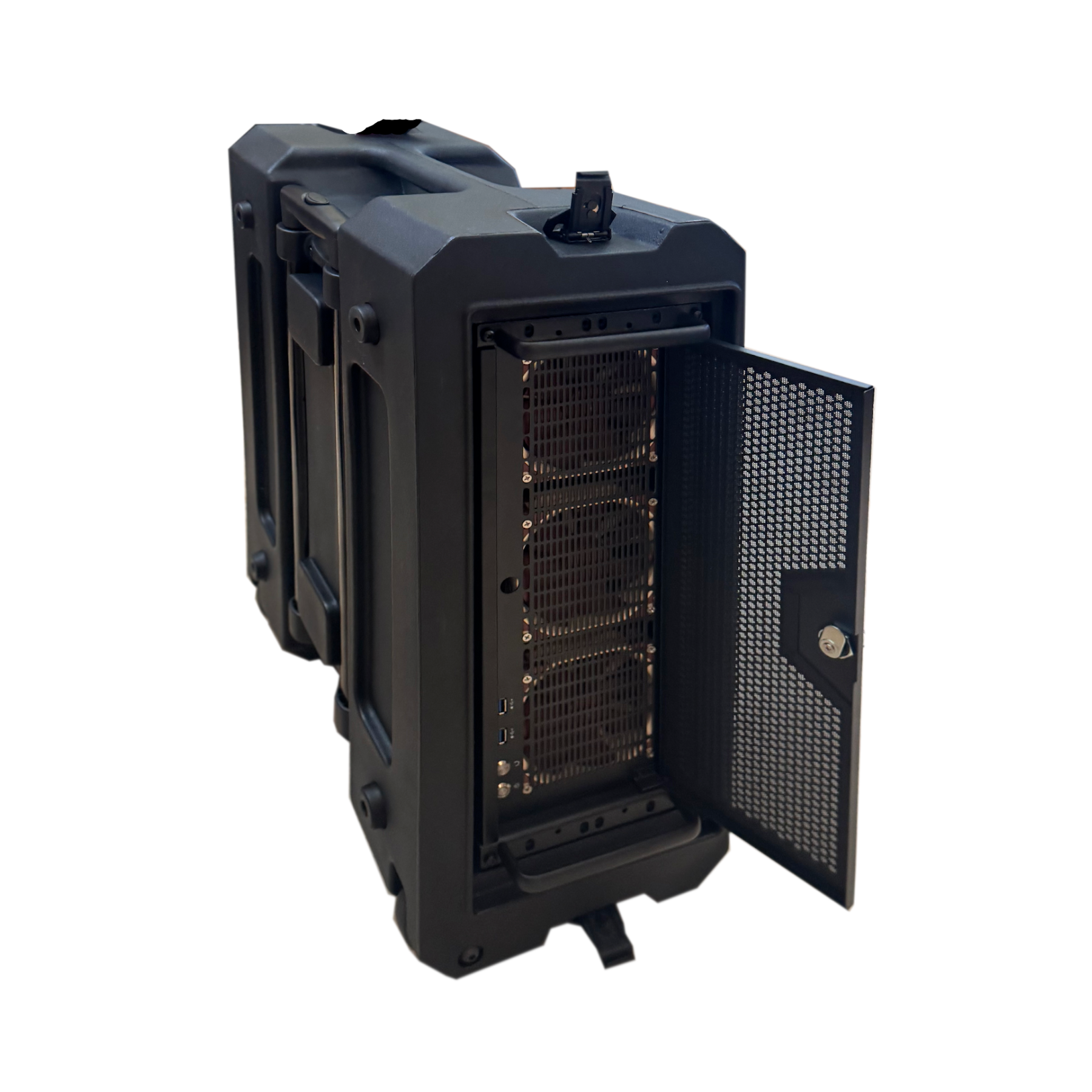
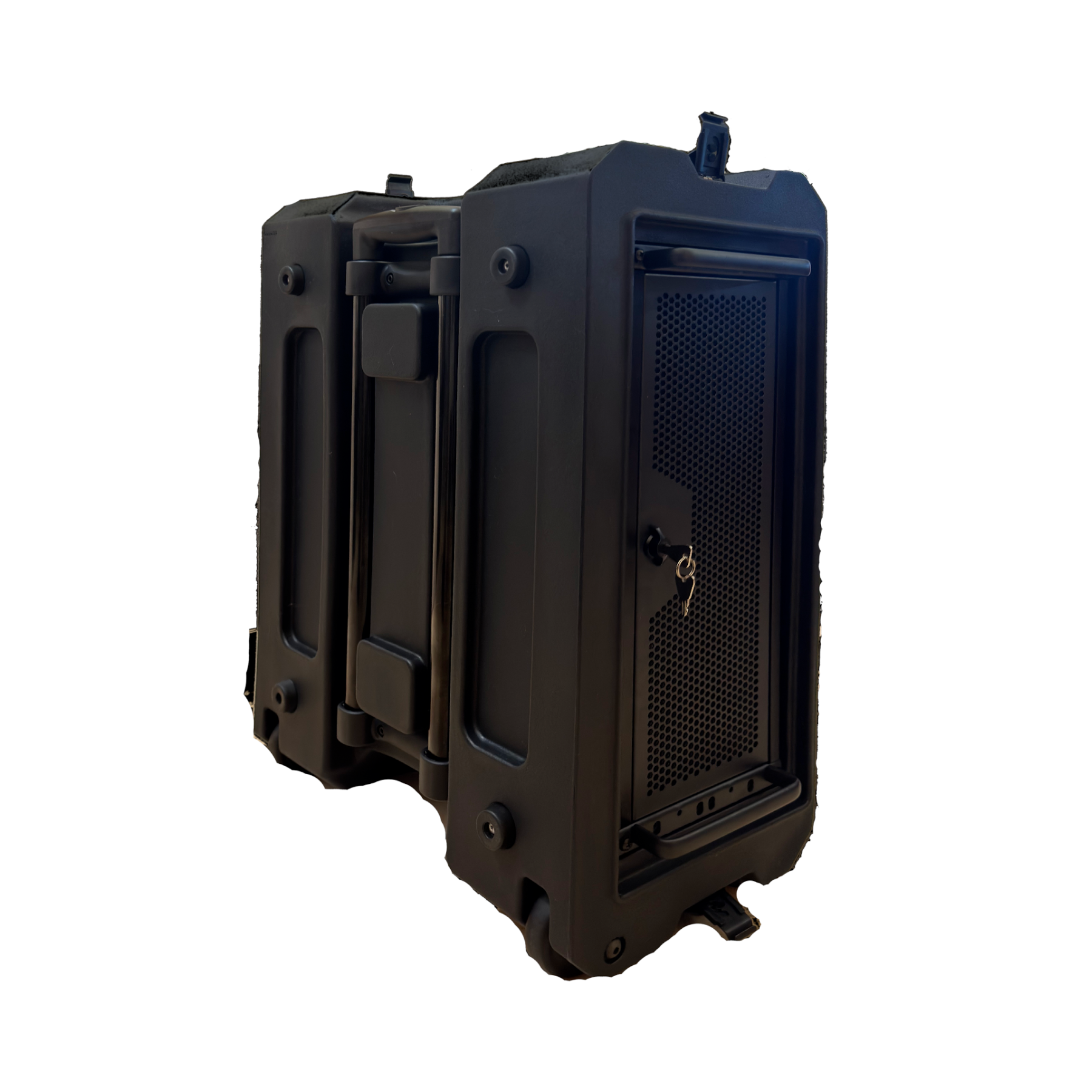
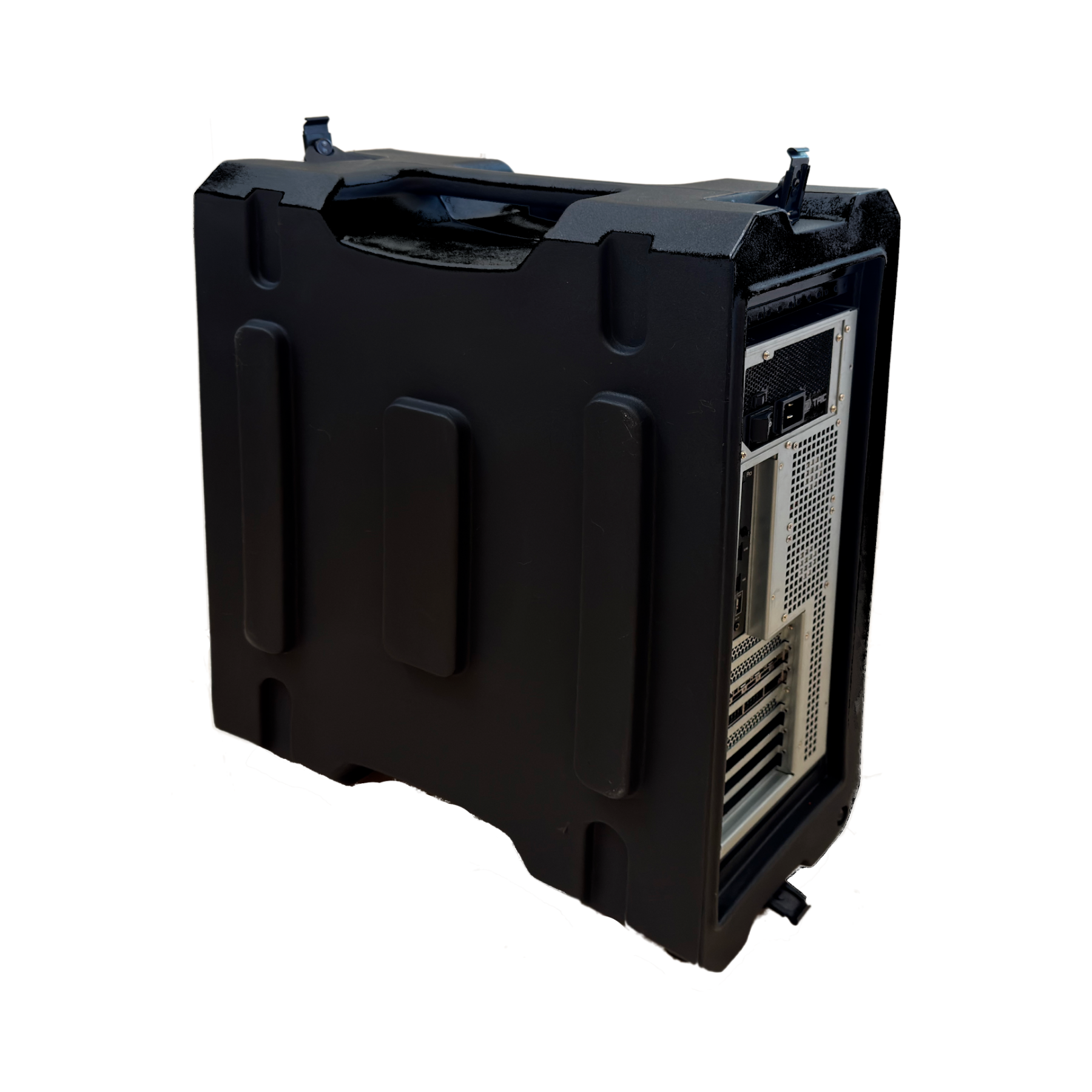
We built their MVP on Chimera’s Professional AMD 25II, Rack. This system offers enterprise-grade reliability and speed for a limited number of users.
AI Software Stack
The viability of this sovereign AI model is a direct result of a recent and powerful trend in the technology industry: the proliferation of high-performance, open-source AI models. Historically, state-of-the-art AI was accessible only through proprietary APIs from large cloud providers, forcing a dependency on their infrastructure.10 The emergence of open models that can be run on local hardware has shattered this paradigm. Chimera Computing Corp leveraged this trend to build a complete, best-in-class conversational AI pipeline for SoberCompanion.ai that operates entirely on-premises:
Knowledge Retrieval: Local vector database powering Retrieval-Augmented Generation (RAG) with clinical resources and patient history.
Language Understanding: The core of the AI is Google's Gemma 7B model, a powerful and efficient large language model. (“What Is Google Gemma?”) By running Gemma locally, all user conversations are processed and understood within the secure perimeter of the server. No prompts, queries, or sensitive text are ever transmitted to an external API, providing a complete guarantee of conversational privacy.
Speech-to-Text (STT): User speech is transcribed into text using a locally hosted instance of OpenAI's Whisper model. Whisper is renowned for its accuracy and robustness across a wide range of audio conditions. Running it on-premises ensures that the user's raw audio data never leaves the server, a critical security measure. (“openai/whisper: Robust Speech Recognition via Large-Scale Weak Supervision”)
Text-to-Speech (TTS): The AI companion's responses are synthesized into natural, expressive speech using a local instance of Microsoft's VibeVoice model. VibeVoice is capable of generating long-form, multi-speaker conversational audio, providing a highly realistic and engaging user experience. This completes the conversational loop, with every component of the interaction—audio input, text processing, and audio output—handled entirely within the sovereign environment. (“microsoft/VibeVoice-1.5B · Hugging Face”)
The Security Posture
The system's security is multi-layered, addressing both internal and external threats to ensure end-to-end protection and compliance.
Internal Security: The architecture is designed to be HIPAA and SOC 2 compliant from the ground up. All data at rest is protected by AES 256-bit hardware encryption on the Samsung 990 PRO NVMe SSDs. (Samsung V-NAND SSD 990 PRO) Access to the system and its virtual machines is strictly controlled through Role-Based Access Control (RBAC) and multi-factor authentication. Comprehensive, tamper-resistant audit logs record all interactions with PHI, providing a clear and verifiable trail for compliance reviews. (Guide) All cryptographic modules used within the system are FIPS 140-2 validated, meeting a security standard used by government agencies and financial institutions. (“Federal Information Processing Standard 140-2”)
Perimeter Defense: To protect against external network-level threats, the on-premises server is shielded by Cloudflare's Zero Trust platform. This is a sophisticated hybrid security model. Cloudflare's global network acts as a protective shield, providing best-in-class, unmetered DDoS mitigation and a robust Web Application Firewall (WAF) that inspects and blocks malicious traffic before it can ever reach the SoberCompanion.ai server. (“DDoS Protection & Mitigation Solutions”) This architecture provides the best of both worlds: the impenetrable data sovereignty of an on-premises system combined with the massive scale and real-time threat intelligence of a leading cloud security provider. Crucially, Cloudflare has no access to the decrypted PHI that is processed on the server itself, preserving the integrity of the sovereign environment. (“Access | Zero Trust Network Access (ZTNA) solution”)
Results: Privacy, Performance, and Trust
The Southern California pilot validated the strategic case for sovereign AI:
Uncompromising Privacy & Compliance: All PHI remained within the clinic’s perimeter, simplifying HIPAA compliance. Provider-Partners reported greater willingness to upload sensitive details once they knew “SCAI” was hosted locally, not in a public cloud.
Real-Time Responsiveness: Cloud inference typically introduces 200–600ms latency; SCAI’s on-prem servers achieved 30–80ms local responses. In addiction recovery, those milliseconds can decide whether intervention arrives before relapse.
Cost Efficiency: Equivalent cloud deployments would have exceeded $4.3M over five years. On-premises infrastructure cost ≈$195k, producing >92% savings and breakeven in <12 months.
Customization & Control: SCAI’s team adjusted counseling tone, voice, and model iterations based on patient feedback—without waiting for vendor approval or risking proprietary data leakage.
The SoberCompanion.ai deployment makes one fact clear: privacy-first AI is not only possible, it is commercially superior. By anchoring its service in sovereign, on-premises infrastructure, the platform achieved HIPAA compliance, real-time responsiveness, and >92% cost savings compared to cloud. Just as importantly, it built the one asset cloud AI cannot credibly deliver—verifiable trust.
For providers, this means higher patient adoption, stronger therapeutic relationships, and reduced compliance overhead. For investors, it demonstrates a model with scalable economics, a clear competitive moat, and universal applicability across any regulated industry where trust defines market entry.
The lesson is simple: the future of healthcare AI will not be won by those who move data the fastest, but by those who safeguard it best. Chimera Computing Corp offers the blueprint—and the proof—that sovereign AI can do both.
HIPAA-compliance ready privacy
Cloud-beating performanceCost savings
A competitive moat built on patient trust.
Conclusion: The Sovereignty Advantage
The story of SoberCompanion.ai confirms a decisive truth: in regulated industries, trust equals adoption. Cloud-first AI cannot provide the verifiable privacy, compliance, and cost control required for high-stakes applications. Sovereign, on-premises AI can—and it has already proven its value.
By reclaiming data sovereignty, organizations gain three strategic advantages:
Enterprise-grade security: PHI never leaves the perimeter, ensuring HIPAA and SOC 2 compliance with auditable certainty.
Predictable economics: Five-year Total Cost of Ownership is >92% lower than cloud, with break-even achieved at 13 months.
Freedom to innovate: Full ownership of infrastructure and models eliminates vendor lock-in and enables sector-specific optimization.
This is not an isolated win. The same model applies across finance, law, government, and research—any sector where data is both an asset and a liability. The principle is universal: AI’s promise does not require compromising privacy, security, or control.
The cloud-first era is ending. A more resilient, economical, and trustworthy model is here. Chimera Computing Corp provides not just hardware, but a partnership—bringing technical expertise, regulatory insight, and financial clarity to every deployment.
For investors, providers, and leaders, the message is clear: The future of AI belongs to those who control it.
